Step one
Detection
The instrument is chosen to suit your pipe, copper or plastic, hot or cold, for an estimated $150 to $400.
AZ ROC R-37 licensed work only · Glendale and its neighborhoods
(623) 777-8670Start with the year your house was built
Leak detection in Glendale, AZ that starts with the pipe: what it is made of, whether the loss is on the hot or cold side, and which system it is in. Then the right instrument comes on the first visit, at an estimated $150 to $400.
What a visit settles
Estimated search$150‑400
Local crew
Glendale work, taken by the people who do it
Local knowledge
From 1914 bungalows to 2020s builds
Detection, scoped before priced
The finding written down, not a summary
AZ ROC R-37
License number on every written quote
The pipe decides the method.
Pipe material and hot or cold side settled first, then the spot is marked and written up.
Call (623) 777-8670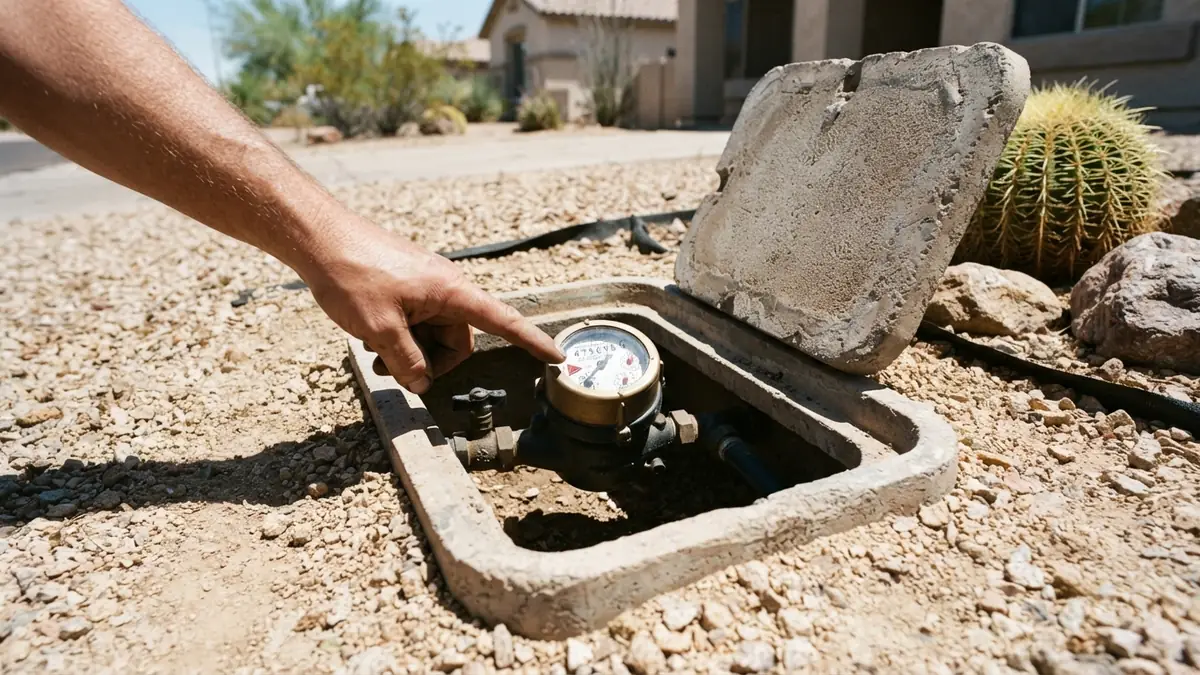
About Rillstone
Glendale's houses run from 1914 bungalows to homes finished in the last few years, and the pipe under them covers the same range. That is why the first questions are the year the house went up and what the water heater's cold valve does to the meter, not where the stain is. With those two answers we can usually say on the phone whether the visit needs a ground microphone, tracer gas or a thermal camera.
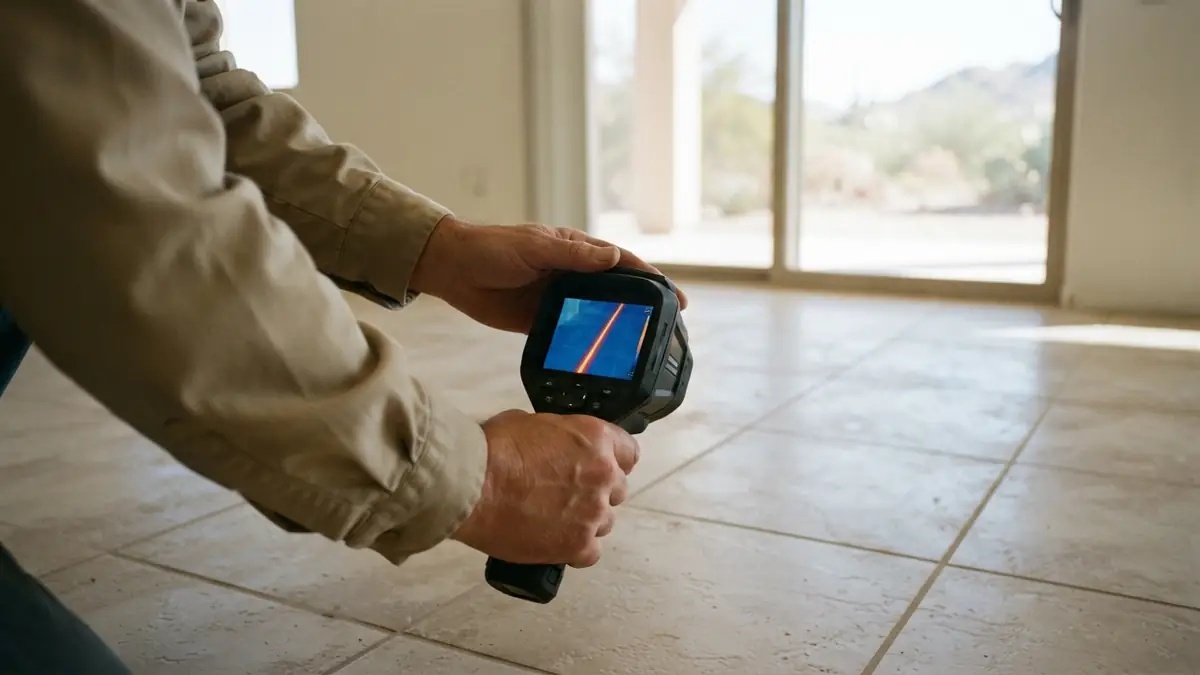
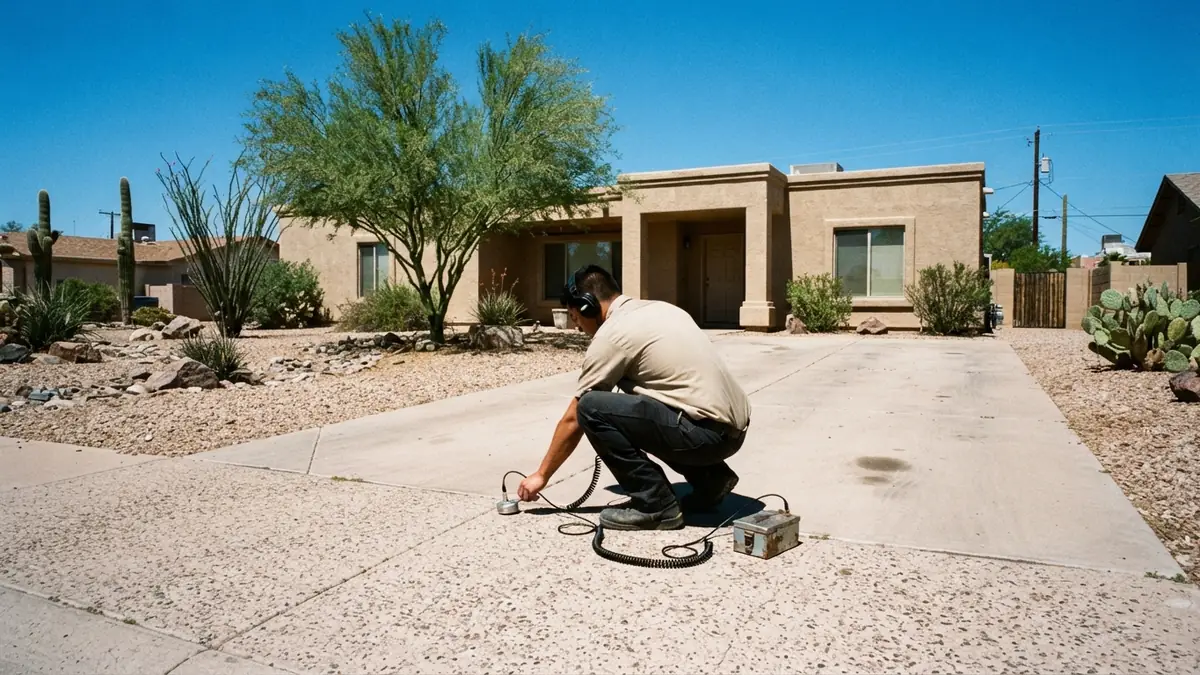
Most of the skill in locating a leak is choosing how to listen for it. Copper pipe carries the hiss of escaping water along its length to a ground microphone; plastic pipe deadens that sound within a few feet, so the line is filled with a harmless tracer gas and followed with a sniffer instead; a hot line under a slab warms the floor enough for a thermal camera. Which of those applies depends on what was installed, and that depends on the year the house went up.
What we do
Step one
The instrument is chosen to suit your pipe, copper or plastic, hot or cold, for an estimated $150 to $400.
Step two
What is checked, and in what order
What we take on
The related lanes, with a range against every one.
All servicesSlab Leak Detection in Glendale
Most houses in Glendale stand on concrete slabs, so an indoor supply leak usually means a search under concrete.
Water Line Leak Detection in Glendale
Glendale's service-line records show copper in 98 percent of the lines reviewed, which suits acoustic work.
Pool Leak Detection in Glendale
More than a third of Glendale's single-family homes had a backyard pool in a 2015 count, and in a desert summer a falling waterline can be evaporation as easily as a leak.
Irrigation Leak Detection in Glendale
A Glendale yard that stays damp is being watered by something.
Emergency Leak Detection in Glendale
Water pooling in the meter box goes to Glendale Water Services.
Costs
The trade's published figures put locating a leak at an estimated $150 to $400. Within that band the price follows the instrument your pipe calls for and how awkward the pipe is to reach, rather than minutes on site.
Leak Detection
$150 - $400
Estimated - same or next workday
Emergency Leak Detection
$150 - $400
Estimated before the after-hours fee - same day where water cannot be stopped
Slab Leak Detection
$200 - $500
Estimated - same or next workday
Every figure here is an estimated range. Your own number comes as a written quote, agreed before any work.
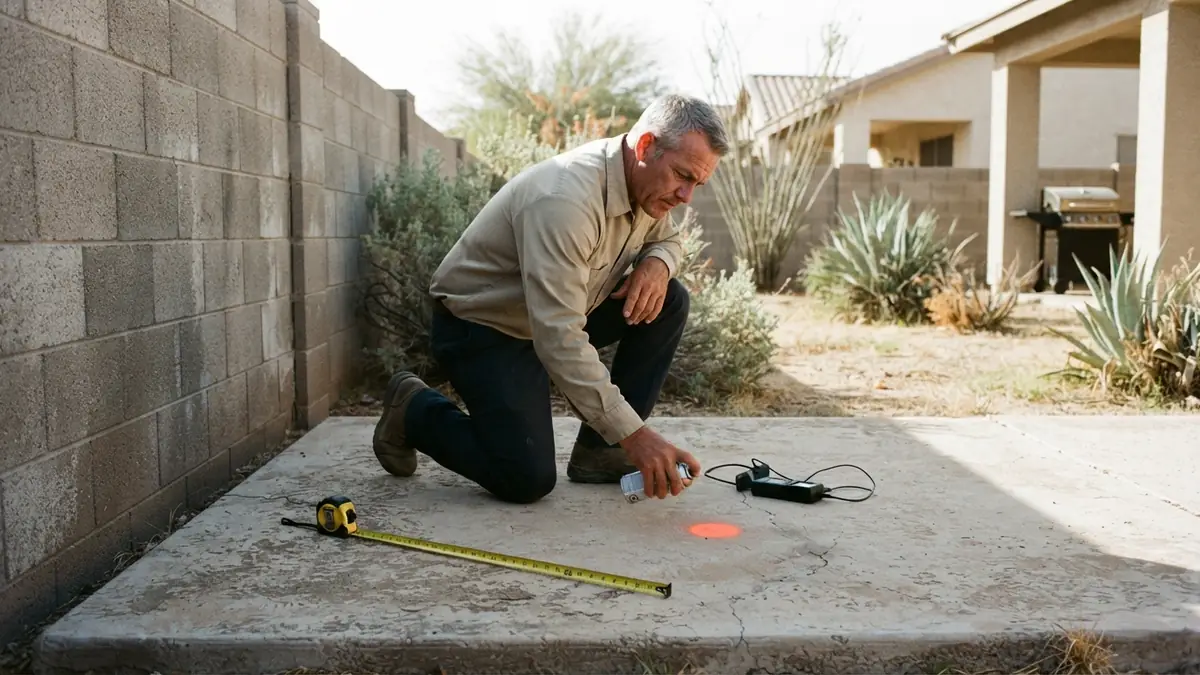
The route
Pipe material and hot or cold side settled first, then the spot is marked and written up.
Tell us the year and the symptom
When the house was built, what made you call, and how the meter behaves once every fixture is off. The year is the best early clue to what the pipe is, and the pipe decides the instrument.
Close three valves with us on the phone
The house shutoff, the irrigation shutoff and the cold inlet on the water heater. Each one halves the search and costs nothing, and between them they usually say whether the leak is outside, in the yard, or on the hot or cold side indoors.
We bring the instrument that suits the pipe
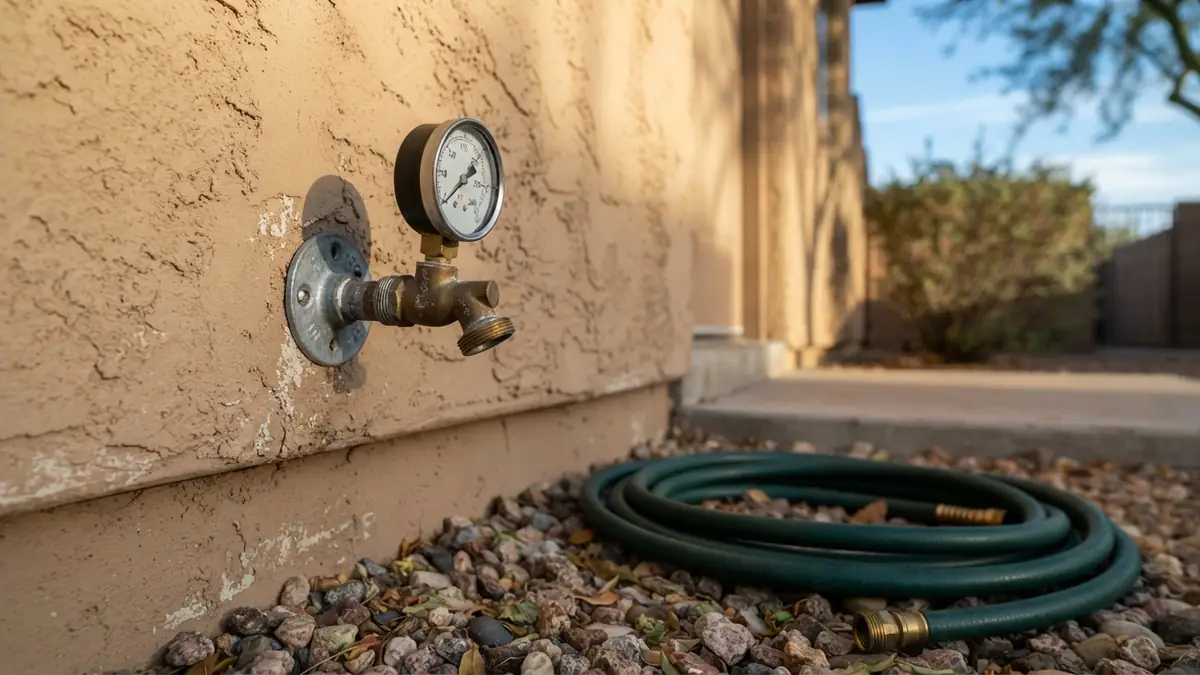
A ground microphone for copper, tracer gas for plastic or a very quiet leak, a thermal camera for a hot line, a pressure gauge to test one section against another. The route of the pipe is traced first, so we listen where it actually runs.
The spot marked, the method written down
The leak's position is marked where you can see it, with a short note of the instrument that found it and what fixing it will probably take. The repair is quoted separately, and any permit it needs comes from the City of Glendale.
Before you choose
Each is about how the leak will be found, which is easier to check than a promise that it will be.
Will you ask what the pipe is made of?
Copper, polybutylene, PEX and CPVC are found in different ways. A visit planned without that question can bring the wrong instrument for the house.
Which side has been ruled out, and how?
House or yard, hot or cold, supply or irrigation. Each answer should come from a valve and a meter reading you could repeat yourself.
Is the search priced apart from the repair?
It should be. Finding the leak is diagnosis and fixing it is plumbing, and a bill that keeps them apart is one you can compare.
What will I have in writing?
A mark on the floor or ground, the instrument that confirmed it, and a line on what the fix probably involves. Any plumber can work from that note, and it travels well to a second opinion.
With a little over seven inches of rain a year, wet ground here usually has a pipe or a sprinkler behind it.
Where we work
Glendale and eight of its neighborhoods, from 1914 bungalows near downtown to homes of the 2000s. The year a house went up shapes how its leak is found.
Questions
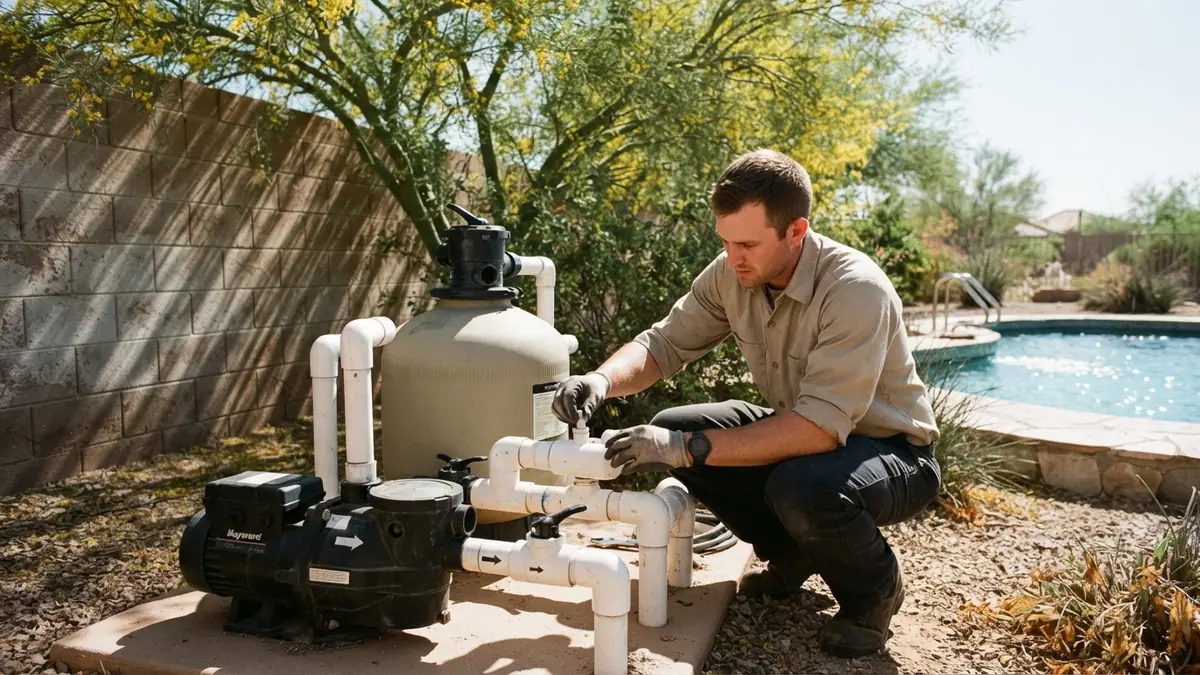
Something not covered here?
Put it to us by phone. Plain answers, an estimated range and nothing to sign.
Call (623) 777-8670They split the plumbing into sections with valves, find the section that loses pressure, and then use the instrument that suits that pipe: a ground microphone on copper, tracer gas on plastic, a thermal camera on a hot line. Nothing is opened to look; the opening comes later, for the repair, at the marked spot.
Accurate to a small area when the instrument suits the pipe, and far less so when it does not. A microphone on copper or a thermal camera on a hot line can usually narrow it to a spot; the same microphone on plastic pipe may hear very little. Matching the tool to the pipe is most of what accuracy means here.
The trade's published figures put most Glendale houses at an estimated $150 to $400, with slab and yard-line searches reaching an estimated $500 to $600. Method sets the figure more than hours do: a hot line glowing on a thermal camera is a shorter job than a plastic line that has to be filled with tracer gas. Nobody has verified a Glendale average, so none is printed here. Give us the build year and the valve results for a free quote by phone; the written quote follows before work starts.
Yes, provided the leak is downstream of it and nothing else is drawing water. Shut every fixture and appliance, switch the irrigation controller to off, and look at the leak indicator, the little triangle or wheel that spins at the faintest flow. Movement means water is leaving the system somewhere. Glendale is swapping its mechanical meters for electronic ones over several years; where yours has already been replaced the display reads differently, and Glendale Water Services can explain it.
By listening, by looking for heat, or by following a gas. Acoustic gear picks up water forced out of a pressurized pipe and does best on copper; a thermal camera shows the warmth of a hot-water leak through a slab; tracer gas, a harmless hydrogen and nitrogen blend, is fed into the line and sniffed for where it reaches the surface, on any pipe material. Pressure tests come first, to prove which section is losing water before any of those three is brought out.
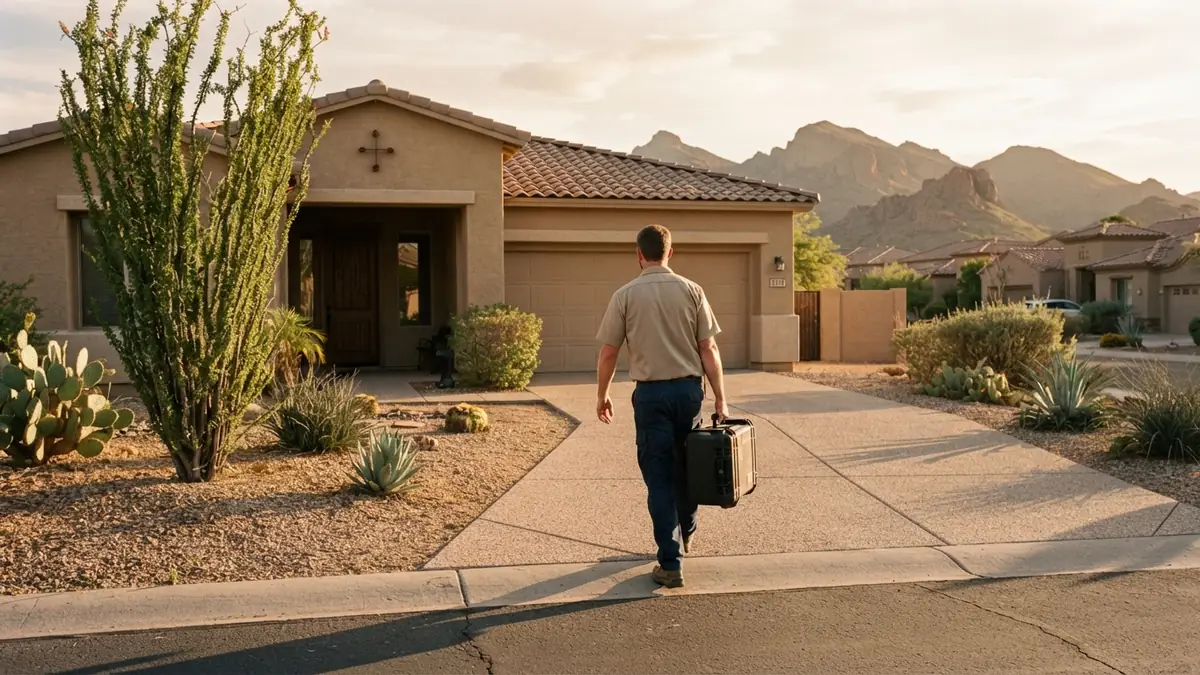
Give us the build year and what each valve did to the dial. You get a free quote during that call, and a written quote ahead of any work.
Talk to us
Call now
(623) 777-8670Pipe material and hot or cold side settled first, then the spot is marked and written up.
Before you call
Where we work
Every area we cover